Removing wallpaper can seem like a daunting task, but it doesn’t have to be. Whether it’s outdated patterns or a fresh start, many homeowners find themselves facing the challenge of stripping away old wallpaper. Understanding the right techniques and tools can make the process smoother and more efficient.
With the right preparation and a bit of patience, anyone can transform their space by removing wallpaper. This guide will explore effective methods for wallpaper removal, tips to avoid common pitfalls, and how to prepare the walls for a fresh new look. Say goodbye to those old designs and embrace the blank canvas that awaits.
Overview Of Wallpaper Removal
Wallpaper removal involves several steps and requires specific techniques to ensure efficiency and minimize damage to the walls. Homeowners often face challenges with the removal process, especially when dealing with different wallpaper types.
Tools Required
- Scraper: Use a sharp scraper for lifting wallpaper edges.
- Sponge: Keep a damp sponge to moisten the wallpaper.
- Spray Bottle: Fill a spray bottle with water or a wallpaper removal solution for application.
- Putty Knife: Implement a putty knife for scraping stubborn areas.
- Drop Cloth: Place a drop cloth on the floor to catch any debris.
Preparation Steps
- Clear the Area: Remove furniture and cover the floors.
- Test the Wallpaper: Identify the wallpaper type to choose the best removal method.
- Score the Wallpaper: Use a wallpaper scorer to create small holes, aiding in moisture penetration.
Removal Methods
- Wet Method: Apply water or a stripping solution to the wallpaper. Allow it to soak for several minutes. Then, use the scraper to remove the paper.
- Dry Method: Gently pull at the edges to separate the wallpaper from the wall. Use the scraper for any remaining bits.
- Chemical Stripper: Apply a chemical solution specifically designed for wallpaper removal. Follow instructions carefully and ensure adequate ventilation.
Post-Removal Steps
- Clean the Walls: After removing the wallpaper, wash the walls with soap and water to remove any residue.
- Repair Damages: Fill in any holes or imperfections with spackling compound and sand smooth.
- Prep for New Wallpaper or Paint: Ensure the surface is clean, dry, and ready for a new design.
Understanding the various techniques and tools involved in wallpaper removal helps homeowners to execute the task effectively, leading to a fresh, updated space.
Tools And Materials Needed
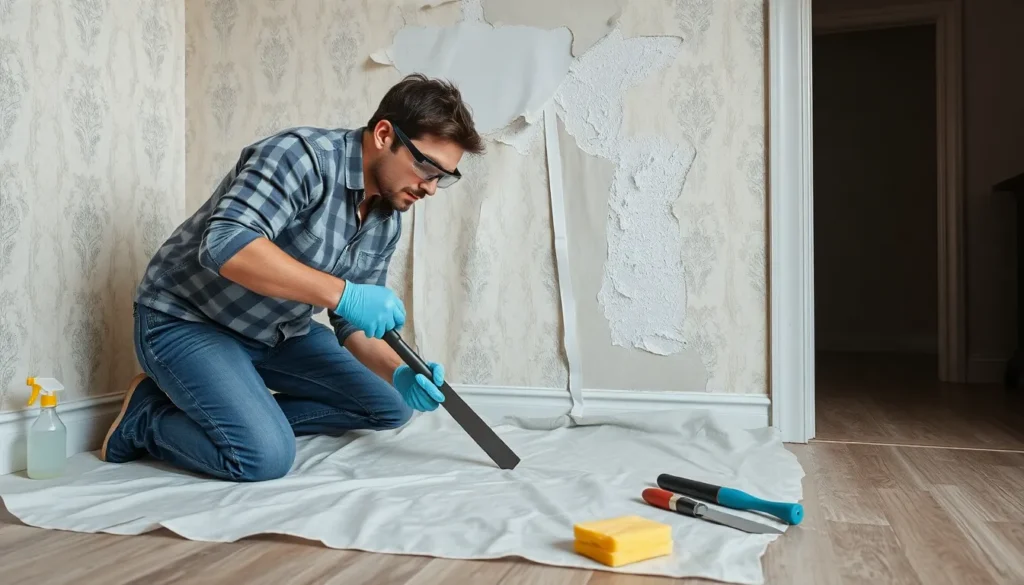
Successful wallpaper removal requires specific tools and materials. Utilizing the right gear ensures efficiency and safety throughout the process.
Essential Tools
- Scraper: A broad scraper or putty knife effectively removes loose wallpaper. It helps in lifting and peeling layers without damaging the wall.
- Sponge: A sponge aids in applying water or cleaning solutions. It ensures thorough wetting of the wallpaper for easy removal.
- Spray Bottle: A spray bottle distributes water or wallpaper removal solution evenly. It simplifies the wetting process and saves effort.
- Putty Knife: A narrow putty knife reaches tight spaces. It assists in carefully lifting edges or stubborn spots of wallpaper.
- Drop Cloth: A drop cloth protects flooring and furniture from water and debris. It maintains cleanliness in the work area.
- Scoring Tool: A scoring tool creates small holes in the wallpaper surface. It aids in the absorption of water for more effective removal.
Safety Gear
- Gloves: Gloves protect hands from moisture and potential irritants. They enhance grip on tools while keeping skin safe.
- Goggles: Goggles shield eyes from debris and splashes. They ensure visibility during the removal process.
- Mask: A dust mask minimizes inhalation of particles during scraping. It protects respiratory health when using chemical strippers.
- Knee Pads: Knee pads provide comfort when kneeling for extended periods. They help prevent strain during extensive scraping or washing.
Methods Of Wallpaper Removal
Several methods exist for effective wallpaper removal, each suitable for different wallpaper types. Understanding these techniques enables homeowners to choose the best approach for their specific situation.
Peel And Stick
Peel and stick wallpaper removal involves gently pulling the wallpaper away from the wall without any additional tools. Homeowners should start at a corner or seam, slowly peeling the material down toward the floor. For stubborn pieces, use a putty knife to lift edges. This method works best for modern peel-and-stick wallpapers that adhere without excessive glue application.
Wet Removal
Wet removal utilizes water or a wallpaper removal solution to assist in loosening the adhesive. Homeowners should score the wallpaper first to enhance moisture absorption. After scoring, spray the surface evenly with water or a solution and let it sit for a few minutes. A sponge helps apply moisture evenly and soften the adhesive. Once it’s adequately soaked, use a scraper to lift the wallpaper away from the wall in sections. This technique suits traditional wallpaper styles well.
Steaming
Steaming offers an efficient way to remove wallpaper by using steam heat to loosen the adhesive. A wallpaper steamer, available at most hardware stores, generates hot steam that penetrates the wallpaper. Homeowners should hold the steamer against the wallpaper for a few seconds, then use a scraper to peel it away. This method works effectively for older wallpapers that set tightly to the wall and minimizes the need for harsh chemicals.
Chemical Solutions
Chemical solutions involve using specialized wallpaper strippers to dissolve the adhesive. Homeowners should always follow manufacturer instructions when applying these products. Typically, they apply the chemical solution directly to the wallpaper with a sponge or spray bottle, allowing it to sit for the recommended time. Afterward, a scraper helps lift the wallpaper from the wall. This method may be more effective on tough adhesives but requires proper ventilation and safety gear.
Tips For A Successful Removal
Successful wallpaper removal relies on careful preparation and proper techniques. Following these tips ensures a smoother process and minimizes the risk of damage to walls.
Preparing The Room
- Clear the Area: Remove furniture, decor, and any items near the walls to create a safe workspace. This minimizes the risk of damage.
- Protect Flooring: Lay down drop cloths or tarps to catch any debris and protect floors from water damage during the removal process.
- Turn Off Power: Ensure that electrical outlets and switches are turned off to avoid accidents while working around them.
- Ventilate the Space: Open windows or use a fan to improve air circulation, especially when using chemical strippers.
Techniques To Avoid Damage
- Score Carefully: Use a scoring tool gently to avoid damaging the underlying wall surface. Scoring helps the removal solution penetrate the wallpaper adhesive.
- Start at the Edges: Begin peeling or scraping from the edges and work your way inward. This prevents pulling and tearing that could damage the wall.
- Use Water Sparingly: Apply water or removal solutions gradually. Over-saturation can lead to drywall damage or mold growth.
- Test Adhesive: Always test a small section before applying any removal solution to determine how the wall will react.
- Patience is Key: Allow time for the solution to work. Rushing the process can lead to mishaps and wall damage.
Removing wallpaper doesn’t have to be a daunting task. With the right techniques and tools in hand homeowners can achieve a fresh and updated space. Understanding the various methods available allows for a tailored approach based on the specific wallpaper type.
Preparation is key to a successful removal process. By taking the time to clear the area and follow safety precautions homeowners can minimize damage and ensure a smoother experience. Embracing these strategies not only transforms walls but also revitalizes the entire room.
Ultimately the effort put into wallpaper removal can lead to a rewarding outcome that enhances the beauty and functionality of any living space.