Brutalist architecture might sound like a fancy term for a building that forgot to put on its Sunday best, but it’s so much more than that. With its raw concrete and bold geometric forms, this style isn’t just a home; it’s a statement. Imagine living in a place that feels like a fortress yet invites creativity and conversation. It’s where minimalist design meets artistic rebellion, and trust us, it’s not just for the avant-garde hipsters.
In a world of cookie-cutter homes, a brutalist abode stands out like a moody teenager at a family reunion. Whether you’re drawn to its unapologetic aesthetics or the way it challenges conventional design, a brutalist home offers a unique blend of functionality and flair. Get ready to explore how this architectural marvel can transform your living space into a bold expression of individuality.
Overview of Brutalist Architecture
Brutalist architecture emerges as a unique design style, emphasizing raw materials and striking forms. It utilizes concrete extensively, presenting an unrefined aesthetic that often challenges conventional norms. Architects favor open floor plans in these homes, allowing for flexible living spaces that adapt to various needs.
Shapes play a crucial role in brutalist design. Geometric forms dominate the landscape, with angular lines contributing to a bold appearance. Large, unadorned surfaces create an impressive visual impact; their straightforwardness resonates with the minimalist ethos.
Functionality remains a central aspect of brutalist architecture. Designers often consider practicality alongside form, resulting in structures designed for everyday use. These homes may incorporate elements like extensive windows, bringing in natural light while merging indoor and outdoor environments.
Brutalist architecture also reflects historical context. Originating in the mid-20th century, it flourished during a time of social change and experimentation in design. The movement sought to break away from ornate styles, advocating for honesty in materials and simplicity in form.
Communities benefit from brutalist structures that stand out among typical housing options. These homes showcase individuality, expressing personal style in a cluttered architectural landscape. With increasing interest in sustainable and unconventional designs, the appeal of brutalist architecture continues to grow, attracting those who appreciate its distinct character and functionality.
Key Characteristics of Brutalist Architecture Homes
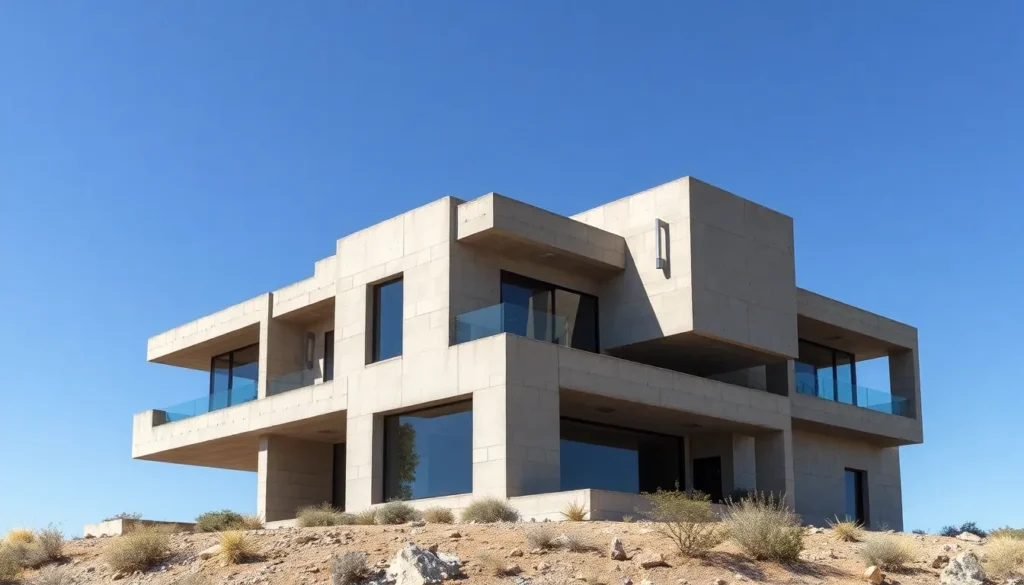
Brutalist architecture homes stand out through their raw aesthetic and striking features. Key characteristics include materials, textures, and design elements that create a bold visual impact.
Materials and Textures
Concrete serves as the primary material in brutalist homes, providing durability and a unique look. This style often features exposed surfaces, showcasing the material’s natural imperfections and variations. Brick and stone may be employed as complementary materials, adding warmth and depth. Additionally, metal accents can enhance the rugged feel, creating a contrast that draws the eye. Textures play a crucial role, with rough finishes emphasizing honesty in design. Together, these components create a tactile experience that resonates with the emphasis on practicality and strength.
Design Elements
Bold geometric shapes define the design of brutalist architecture homes. Angular lines dominate the structure, producing a striking profile against the landscape. Open floor plans facilitate flexibility, allowing spaces to adapt to various needs. Large windows maximize natural light, creating connections between indoor and outdoor environments. Overhanging roofs are also common, adding visual weight while providing shelter. These design elements combine to create functional yet artistic living spaces that embody the essence of brutalism.
Notable Examples of Brutalist Architecture Homes
Brutalist architecture is well represented through various iconic homes and contemporary interpretations that showcase its distinctive features.
Iconic Structures
One prime example of brutalist architecture is the Maison de la Culture in Grenoble, France. This structure exemplifies the bold geometric forms that characterize the style. Another notable building is the Boston City Hall in Massachusetts, renowned for its raw concrete and sculptural elements. The Villa Savoye, designed by Le Corbusier in France, perfectly illustrates how brutalist principles can create functional living spaces. Each of these structures showcases the movement’s emphasis on material honesty and geometric forms.
Contemporary Interpretations
Modern architects have embraced brutalism, incorporating it into new residential designs. The K House in Japan features exposed concrete and expansive, open spaces that highlight minimalist aesthetics. In Australia, the Walsh Street House presents an intriguing combination of raw materials and innovative layouts that resonate with brutalist philosophies. Similarly, the Concrete House in Mexico boldly showcases stone and concrete, creating a striking visual impact while fostering sustainable living. Each contemporary home reflects a renewed interest in raw beauty and artistic expression, demonstrating brutalism’s lasting influence.
Pros and Cons of Living in a Brutalist Architecture Home
Living in a brutalist architecture home offers a unique experience. This distinctive style comes with both advantages and disadvantages.
Advantages
Brutalist homes provide a striking visual appeal that stands out against traditional designs. Large windows enhance natural light, creating bright and airy spaces. Open floor plans ensure flexibility in interior arrangements, accommodating various lifestyles. Materials like concrete add durability, reducing maintenance needs over time. Unique geometric shapes promote creative design possibilities, attracting those seeking individuality. Energy efficiency can improve with well-placed thermal mass, helping to regulate indoor temperatures.
Disadvantages
Brutalist architecture often faces criticism for its stark appearance, which may not appeal to everyone. Cold materials like concrete can lead to uncomfortable temperature fluctuations if not designed properly. Additionally, maintenance of raw concrete surfaces may require frequent attention to prevent wear. Some might find the aesthetic uninviting, especially if they favor warmth and coziness. Limited traditional features could restrict customization options for homeowners. Concerns about noise insulation arise, as concrete can amplify sounds within the home.
Tips for Embracing Brutalist Architecture in Your Home
Incorporating brutalist architecture into living spaces involves several strategic choices. Start with the use of raw materials like concrete, brick, and stone to create an authentic aesthetic. Opt for bold geometric shapes, which define this architectural style and provide a striking visual impact.
Consider designing open floor plans, as they enhance flexibility and encourage an airy feel throughout the home. Large windows allow natural light to fill the spaces, highlighting the unique materials and textures.
Focus on functional elements like overhanging roofs, which add architectural interest and provide shelter over entrances or patios. Embrace the idea of minimalism by selecting furniture and decor that complement the raw aspects of the home without overwhelming the space.
Add warmth to the environment by incorporating soft textiles and natural wood elements, balancing the starkness of concrete with inviting textures. Utilize intentional lighting to accentuate structural features and create cozy atmospheres.
Incorporate outdoor spaces such as terraces or gardens, which provide a connection to the environment and enhance the brutalist concept of merging indoor and outdoor living. Showcase personal artwork or sculptures that resonate with your style, adding individuality to the overall design.
Explore contemporary brutalist designs to find inspiration and ideas that resonate with modern trends while retaining the essence of the original style. Engage with architects or designers who specialize in this field to ensure a cohesive approach that respects the core principles of brutalism.
Prioritize sustainability by considering eco-friendly materials and energy-efficient designs, blending modern needs with brutalist ideals. The application of these tips encourages the creation of a unique living space that celebrates the beauty and functionality inherent in brutalist architecture.
Embracing brutalist architecture in home design presents a unique opportunity for individuals to express their personal style. Its striking forms and raw materials challenge conventional aesthetics while promoting functional living spaces. As interest in sustainable and distinctive designs grows, brutalism stands out as a bold choice that reflects individuality and innovation.
With careful consideration of materials and design elements, anyone can create a harmonious blend of modernity and tradition. By integrating warmth and natural elements, brutalist homes can become inviting spaces that resonate with both the occupants and their communities. This architectural style isn’t just a trend; it’s a lasting statement that continues to inspire and captivate.