Gutter installation plays a crucial role in protecting homes from water damage. Properly installed gutters channel rainwater away from the roof and foundation, preventing costly repairs down the line. With various materials and styles available, choosing the right gutters can enhance both functionality and curb appeal.
Navigating the installation process might seem daunting, but understanding the basics can make it manageable. From selecting the right materials to ensuring proper slope and drainage, every detail matters. Whether tackling a DIY project or hiring a professional, knowing what to expect can lead to a successful outcome. Dive into the essential aspects of gutter installation and discover how to safeguard a home effectively.
Overview Of Gutter Installation
Gutter installation plays a vital role in home protection, specifically by directing water away from roofs and foundations. Various materials, including aluminum, vinyl, and copper, offer different benefits, such as durability and aesthetic appeal. Each material impacts functionality and appearance, so selecting the appropriate option is essential for enhancing curb appeal.
The installation process involves several key steps to ensure effectiveness. Firstly, measuring the roofline accurately guarantees that gutters properly fit the structure. Secondly, establishing a slope of 1/4 inch for every 10 feet ensures efficient drainage. Thirdly, securing brackets or hangers at appropriate intervals supports gutter stability.
Homeowners often face a decision between DIY installation and hiring professionals. DIY projects require knowledge and specific tools, while professionals bring experience and skill. Homeowners should weigh the pros and cons of each option, considering factors such as budget and time commitment.
Understanding local regulations and building codes is also crucial, as these can influence installation requirements. Consultation with local experts or contractors often provides valuable insights into local standards.
Types Of Gutters
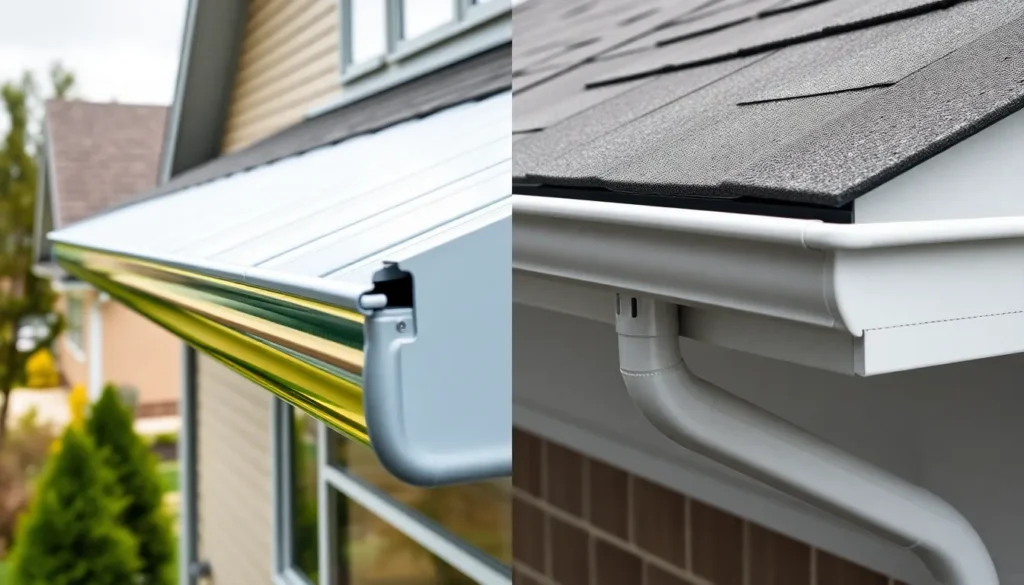
Various types of gutters offer different benefits and characteristics. Selecting the right type ensures efficient water management and enhances home aesthetics.
Aluminum Gutters
Aluminum gutters feature a lightweight, durable design. They resist rust and corrosion, making them suitable for various climates. Homeowners often choose aluminum for its affordability and range of colors. Standard widths include 5 inches and 6 inches, while the thickness typically falls between .027 and .032 inches. Installation involves seamless or sectional options. Seamless gutters minimize leaks, while sectional gutters allow for easier repairs but may leak at connections.
Vinyl Gutters
Vinyl gutters provide a cost-effective, low-maintenance option. They resist rust and rot, but can become brittle in extreme temperatures. Vinyl typically comes in a limited color selection, often requiring homeowners to paint for customization. Standard sizes include 5-inch and 6-inch widths with a thickness of .045 inches. The installation process is relatively straightforward, simplifying DIY projects. However, vinyl gutters may not offer the same durability as metal counterparts and may require replacement after several years of exposure.
The Gutter Installation Process
The gutter installation process involves several critical steps to ensure effective water management. Each phase requires careful execution for optimal performance and longevity.
Preparing For Installation
Preparing for installation starts with gathering essential tools. Installers require a ladder, measuring tape, level, chalk line, and a saw. Ensuring accuracy in measurements is vital; measure the roofline and identify downspout locations. Assess the home’s exterior for obstructions like trees and gutters from adjacent properties that may affect drainage. Cleaning the roof and existing gutters of debris is necessary, as it ensures a clear flow of water. Checking local regulations also serves as a significant step; installation may require permits or adherence to specific guidelines.
Installing The Gutters
Installing the gutters begins with marking the placement of brackets along the roofline. Brackets should align slightly lower than the roof edge, establishing a slope between 1/4 inch to 1/2 inch for every 10 feet of gutter. Securing these brackets firmly ensures stability. Next, attach sections of the gutter, using either a seamless or sectional approach based on the chosen material. If utilizing seamless gutters, professionals often create them on-site to fit specific dimensions. Attach downspouts at marked locations and secure them with screws, allowing for proper water channeling. Lastly, inspect each section periodically during installation for consistent alignment and proper slope, confirming that the system effectively directs rainwater away from the foundation.
Common Mistakes To Avoid
Avoiding common mistakes during gutter installation ensures effectiveness and longevity.
- Incorrect measurements: Taking precise measurements is crucial. An inaccurate measurement can lead to a poor fit, resulting in leaks and drainage issues.
- Improper slope: Establishing the correct slope is essential for drainage. A slope that’s too steep or too shallow can cause water to pool or overflow, undermining the gutter’s function.
- Neglecting to secure brackets: Failing to properly secure brackets may lead to sagging gutters. Strong brackets prevent movement and maintain alignment.
- Choosing the wrong materials: Selecting inappropriate materials may compromise durability. Factors like climate should influence the choice between aluminum, vinyl, and copper.
- Skipping downspout placement: Improper downspout placement hinders water flow. Positioning them away from the foundation protects against potential damage.
- Overlooking maintenance: Ignoring regular maintenance leads to clogs and deterioration. Cleaning gutters biannually can prevent costly repairs.
- Disregarding local codes: Neglecting local building codes can cause legal issues. Researching regulations prior to installation ensures compliance and safety.
- DIY without research: Attempting a DIY project without adequate research often results in mistakes. Consulting professionals or resources can provide guidance and prevent costly errors.
Maintenance Tips For Gutters
Maintaining gutters is essential for optimal functionality and longevity. Regular care prevents clogs, damage, and costly repairs.
- Clean Gutters Frequently: Clear gutters of debris, leaves, and dirt at least twice a year. Seasonal cleaning prevents blockages that lead to overflowing water.
- Check for Leaks: Inspect gutters monthly for leaks or rust spots. Leak detection allows for timely repairs, reducing water damage risks.
- Ensure Proper Slopes: Verify that gutters maintain a slope of 1/4 inch for every 10 feet. This slope enables efficient drainage, preventing standing water.
- Inspect Downspouts: Examine downspouts for obstructions. Downspouts should direct water away from the home’s foundation to avoid flooding.
- Replace Damaged Sections: Replace any bent or damaged sections of gutters promptly. Damaged sections impact overall performance and aesthetics.
- Secure Brackets and Fasteners: Regularly check and tighten brackets and fasteners. Loose hardware can cause gutters to sag or detach from the structure.
- Remove Snow and Ice: In colder climates, remove snow and ice buildup during winter. Ice dams can damage gutters and roofs, leading to severe issues.
- Install Gutter Guards: Consider installing gutter guards to reduce maintenance needs. Guards keep large debris out while allowing water to flow freely.
- Schedule Professional Inspections: Organize professional inspections annually. Experts can identify potential issues and recommend preventative measures.
- Monitor Landscaping: Ensure landscaping does not obstruct gutters. Trees and shrubs planted too close can lead to increased debris accumulation.
Regular maintenance ultimately ensures that gutters perform effectively, safeguarding the home from water damage.
Proper gutter installation is a vital step in protecting a home from water damage. By choosing the right materials and ensuring accurate installation, homeowners can enhance both functionality and aesthetic appeal. Regular maintenance is equally important to keep gutters working efficiently over time.
Whether opting for DIY or hiring professionals, understanding the installation process and avoiding common mistakes will lead to long-lasting results. With attention to detail and adherence to local regulations, homeowners can safeguard their properties and enjoy peace of mind during rainy seasons.